

How brand design teams evolve
Brand design is the differentiator in the age of AI.

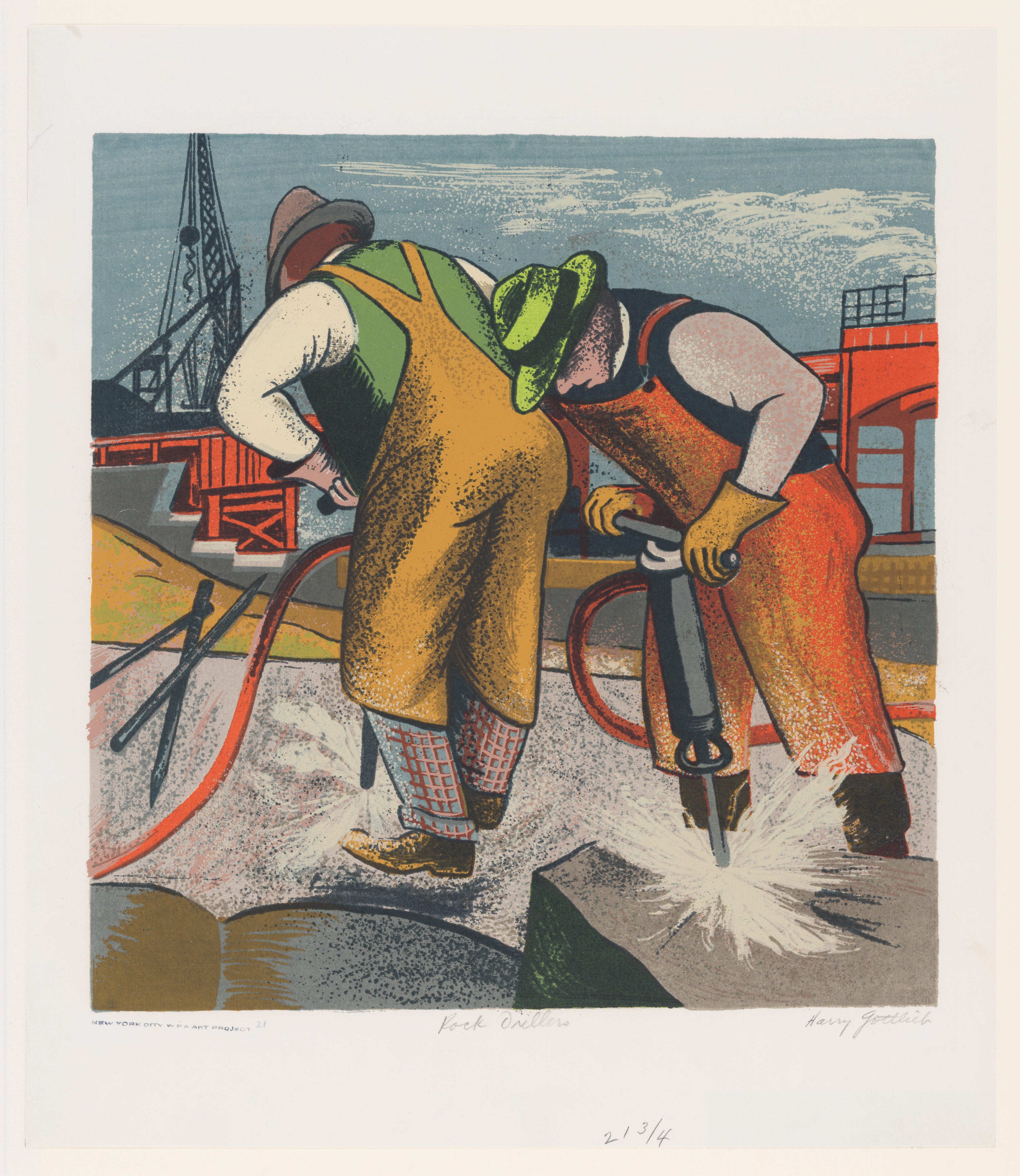
Most tech companies hire brand designers and then bury them under marketing. They bring in people who are, in effect, artists, then treat them like production staff.
That mismatch explains a lot. It explains the sea of sameness in tech. It explains why talented brand designers often stay freelance or work at an agency. It explains why so many in-house teams are exhausted, underused, and blamed for problems they didn’t create.
The modern tech company inherited a structure it never really questioned. Brand got tucked under marketing. Product design got tucked closer to engineering. That one org-chart decision shaped everything that followed.
Product design escaped with status because it sat near the function that made the thing. Engineers straight out of college can make over $120,000 a year, whereas a designer might make 40-60k. Product design was elevated to new levels. Proximity bought product designers leverage, higher salaries, and protection. Brand designers got the opposite. First laid off. Last consulted. Dragged off meaningful work, the second something “urgent” appeared. Because they were always seen as an additional appendage to marketing.
Conceptually, product design and brand design are the same discipline. Both are about shaping behavior, perception, and experience. I jokingly say product design is “form follows function,” and brand design is “form follows fantasy.” But because one grew up beside engineering and the other beside marketing, they became like twins separated at birth.
The bigger problem is that most companies never understood what they hired in the first place. Because the marketing leader, often creatively illiterate, has no idea how to talk to or grow these brand designers.
They did not hire strategic partners. They hired a captive agency. A service desk for decks, landing pages, campaign assets, social posts, sales collateral, and whatever else the quarter demanded. The designer is trapped, but fed.
And during the years of cheap money, bloated teams, and endless hiring, many bad habits were normalized. The age of AI will unravel this.
You cannot bullshit your way into engineering. You either write code or you don’t. You can’t fake your way into design either. The portfolio tells the truth quickly.
Marketing is where things got muddy.
There are great marketers. I know them. I’ve worked with them. They understand story, distribution, audience, timing, and taste. They know how to enroll people in an idea. But tech also allowed another type of marketer to thrive: the kind who can narrate work they cannot actually do. These are the consultant types that slithered through the back door as PMs or PMMs.
If you are accountable for decks, why would you not learn how to make decks? If you are accountable for white papers or any asset that goes into a channel, why would you not learn how they get made?
At a minimum, you should know how to build a rough first draft. Better yet, you should know how to work closely enough with a designer that the handoff is not a pile of vague thoughts and panic. That is not “being less strategic.” That is called respecting the craft you depend on.
For some reason, tech has allowed this lack of accountability to hide inside the language of collaboration.
An engineer who can’t code gets exposed quickly. A designer who can’t design won’t last. But a marketer who cannot take an idea even halfway to execution can survive by pushing the labor downstream and calling it teamwork. Then, when things slow down or quality suffers, the designer gets blamed for being a bottleneck.
That is ridiculous. And it has been tolerated for far too long.
Brand designers are not there to be human middleware for half-formed thoughts. Their role is larger than that. They set the standard for what great work looks like and how it shows up in the world. They establish the tone, the visual language, the level of care, the emotional texture, and the coherence. Everyone else is accountable for the brand too, whether they sit in sales, marketing, support, community, or product. The designer should not be the only adult in the room who knows what “good” looks like—but most of the time, they are, and the pushback against people who’ve never made anything is just a sad part of the game.
That’s why so many brand teams are fried.
From the conversations I’ve had over the past year, most brand designers spend the overwhelming majority of their time on production work. Asset assembly. Deck cleanup. Template wrangling. Taking scattered crumbs and turning them into something presentable so someone else can shove it into a channel.
Then companies wonder why the product feels disconnected from the homepage. Why the sales deck feels like it came from another planet. The campaign looks polished, but the onboarding experience feels generic. When brand designers and product designers do not work together, and when marketing treats design as a cleanup crew, the company pays for it in fragmentation.
The most potent designers I know can move between product and brand. They understand systems and expression. Utility and feeling. They know how a thing works and how it lands. Those people are rare, and they are wasted when all they do is resize assets and fix ugly slides for people who should have known better.
The real value of a brand team lives in the work that usually gets squeezed out: experiments, systems, product collaboration, better defaults, new bets, clearer standards, and tools that raise the floor across the company. This is the major shift with AI right now: brand designers as tool-builders that help others meet them where they are.
That is where the flip has to happen.
A brand designer should not spend the day executing everyone else’s requests one by one. They should be building the brand operating system. The systems, tools, libraries, guardrails, prompts, templates, and principles that let other teams move faster without dragging design into every single task.
Marketing needs a landing page. There are tools and systems for that. In the near future, there will be agents who get it to 70% done. Sales decks. Social assets. Event booths. Brand designers will build tools that make the brand impossible to misrepresent.
That is the future. Not a design team acting like a vending machine. A design team is building the machine.
This is also why I’m bullish on AI.
Not because it replaces designers. Because it exposes who actually has craft and who was hiding behind process or incompetence with no accountability.
The people who used to rely on designers to make every deck, resize every asset, and translate every half-thought into something coherent now have fewer excuses. They can use tools. They can learn prompting. They can generate rough drafts. They can learn to, I don’t know, be a collaborator. They can meet the designer with something real.
And that changes the relationship.
The designer becomes less of a production arm and more of a director, editor, systems builder, and standard-setter. Judgment rises in value. Taste rises in value. Point of view rises in value. The people who only knew how to route work around an org chart are going to have a much harder time justifying their existence.
I don’t think every marketer needs to become a designer. But if you are accountable for an output, you should be able to move it forward. You should understand the materials. You should know what good looks like. You should be able to either make a rough version yourself or build a real partnership with someone who can take it further.
I don’t know what kind of previous jobs these people had, but when I worked in marketing, I had to learn Photoshop, learn how to put together an email image, or a blog hero image, and social posts—while scheduling 20+ posts a day, writing copy for landing pages, and oh yeah, servicing a campaign. Zoom out and ask the simple yet obviously ridiculous question: how can you possibly be making six figures, remotely, in tech, and can’t make something as simple as an image or a deck? Really really think about that.
I’m already living at the beginning of this shift. At my last job and my current one, I’ve pushed teams onto tools like Cursor and Claude Code. We’ve built internal systems that automate parts of white papers, resize logos, and generate blog and email images using brand guidelines and best-in-class examples.
What does that free designers up to do?
Push the brand forward. Work closely with the product. Create better tools. Improve the defaults. Build coherence from the first ad someone sees to the homepage, the demo, the sales conversation, the onboarding, and the first meaningful win inside the product.
That work matters more than production ever did.
Some brand designers don’t have the metabolism to do this. They just want to sit around and make nice things. There are mediocre companies that will allow that, for sure, and your boss can be a marketer who can’t make their own decks. And to each their own. But where I’m coming from, as a leader who wants to build a new model for brand designers to thrive in this age of AI, people need to adapt.
I think the maddening thing for me is that, of course, it falls on the designers to solve this problem. It always fucking does. The “XFN partners” are never held accountable for moving as fast with AI. It’s just how it is. I’m just telling you what the game is as someone who’s sitting at the front of the rollercoaster and has dealt with multiple inept teams that were never held accountable.
I also think brand designers should work much more closely with sales, which is usually the most neglected team in the room. If the brand can help sales build trust faster, reduce friction, and close with more confidence, the business feels that impact immediately. Especially as startups move upmarket, coherence across the sales experience stops being cosmetic and starts becoming a trust signal.
The better model is smaller, sharper, and more accountable.
An engineer. A designer. A writer, researcher, or storyteller.
Three people who can take an idea from first principle to final touchpoint without ten layers of translation, status games, and diluted ownership.
In time, more people will become builders. Role boundaries will blur. More marketers will design a little. Designers are already building like engineers, sometimes faster. More writers will prototype. Fine. Good, even. But that future still needs quality control. It still needs people with portfolios, judgment, and lived experience deciding what deserves to go out into the world.
That is why brand work becomes more valuable, not less.
Brand is not a logo file. It is not frosting on a finished product. It is not a slide in a keynote. It is the felt experience of a company. The world it builds. The standard it sets. The story people tell about it when nobody from the company is in the room.
That kind of work is closer to conducting than decorating.
So if taste is really the differentiator every company claims it is, then invest accordingly. Give brand designers authority. Give them a budget. Give them access to decision-making. Stop burying them under people who cannot make the work they are accountable for and do not understand the craft they depend on.
And my tough love for brand designers: stop waiting for permission. Stop saying yes to everything. If you uphold past patterns, you undoubtedly deserve the past. Introduce new patterns. Make the old model obsolete by building a new, better model that the future demands.
Put designers in the room early enough to shape the future.
Brand design is how you differentiate yourself from others. It’s the foundation for taste, story, and quality. Invest in it accordingly.
Thank you to my buds Mark Johnson and Mike Casebolt for always reading my shitty first drafts and providing thoughtful feedback.
The truest of words. This is just gold.
I appreciate your insight on this topic! Something I am grappling with myself as a brand designer trying to navigate the world of AI and how to integrate it into my workflows.
You stated in your article "In the near future, there will be agents who get it to 70% done. Sales decks. Social assets. Event booths. Brand designers will build tools that make the brand impossible to misrepresent." Who takes it the last 30%? is that still a designer's job? doesn't that still make them a service desk, but with a bit more authority because they built the tools to get it 70% there?
Just curious your perspective.