

A call for new stories
Thoughts on this "New Aesthetic" call and what we really need instead: a new story.

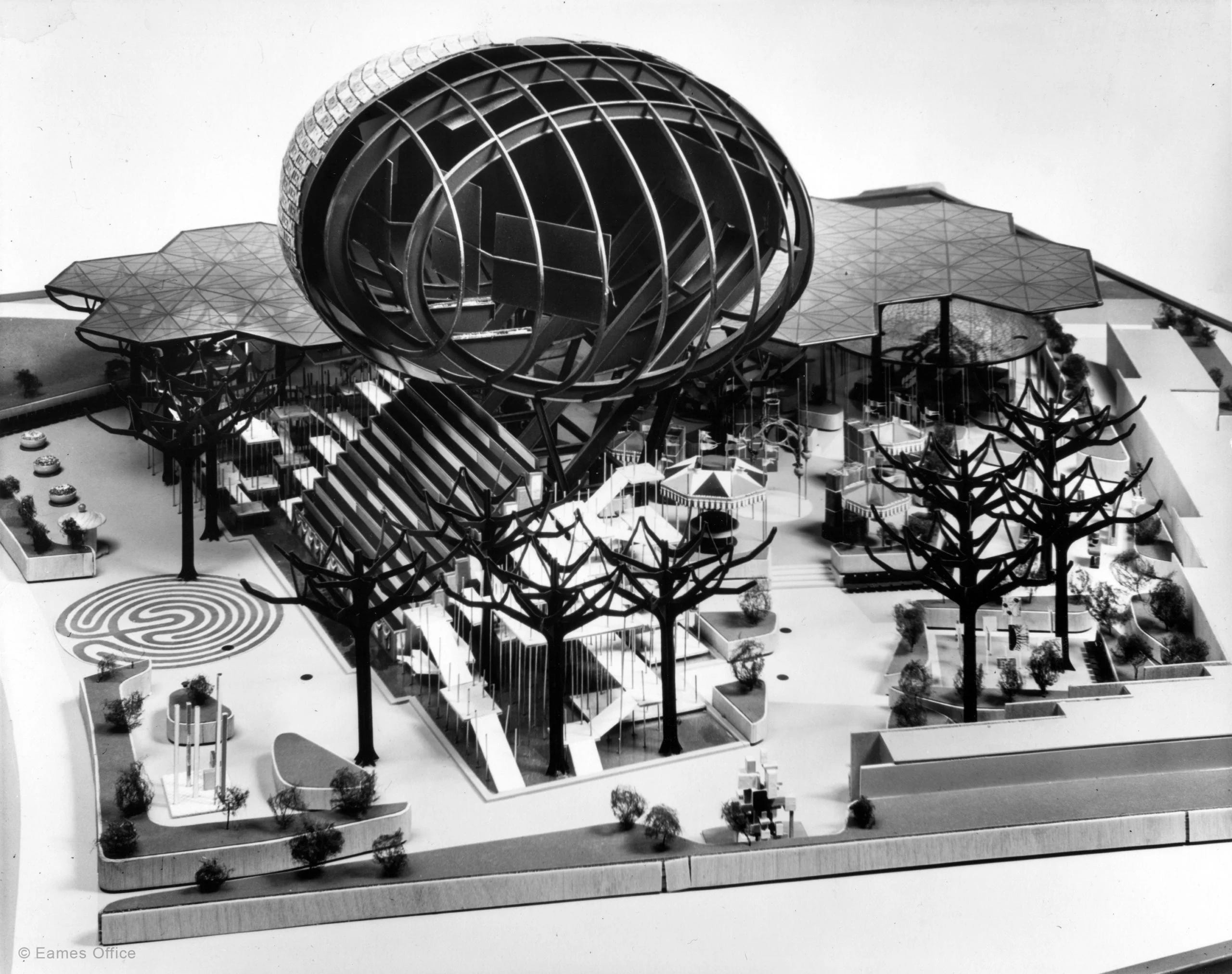
For context, the “New Aesthetic” was created by Patrick Collison and Tyler Cowen, two people I greatly admire for their thinking.
Tl;dr:
Bauhaus intentionally shaped the 20th century’s look, and we’re still living in its design legacy.
We’re deep into the 21st century without a clear new aesthetic; “the future” often looks like retrofuturism, so they’re asking what should come next.
They’re funding artists/architects/designers to pursue genuinely new, beautiful work ($5k–$250k; apply by March 31, 2026; rolling review; no rejection emails).
I read a fantastic essay/response by Stephanie Wakefield here.
Tl;dr:
The “new aesthetics” problem isn’t a shortage of imagination. It’s that our era is full of futurist talk but keeps snapping back to sameness, because institutions and culture keep reasserting conservatism.
She uses Italian Futurism as the extreme case: when inherited forms can’t hold and technology accelerates, you either retreat into nostalgia or you demand new, harder, more intense spatial forms that match modern life.
Bauhaus is her model for how new form becomes possible: not by declaring a style, but by rebuilding the conditions for form through a shared experimental milieu that retrains perception and remakes the categories of thought and making. I love this.
Her punchline is urban: if anything like a renewed futurist practice emerges now, it likely starts in cities and will require Bauhaus-like institutions plus real experimental zones where new ways of living and building can be tested quickly, in public, under different rules.
Here’s my take.
The future does not arrive as an aesthetic. It arrives as a story strong enough that people start rebuilding their lives to match it.
This “New Aesthetic” call reminded me of a story from my former boss, Brian Collins. To me, it was a story about design and how it installed new futures.
He grew up in Lexington, Massachusetts, a colonial town full of Cape houses and early-American tradition. Small dormers, shutters, the kind of architecture that says we know who we are. Then, around 1964 or 1965, Brian started noticing houses that looked like they’d arrived early from the future. Flat roofs. Big glass. Interiors with Eames and George Nelson silhouettes. A different way of living, dropped into a neighborhood still shaped by the Revolution.
He would tell me how he rode his bike past those houses and felt the jolt, as if the neighborhood had split into two timelines. The past on one street. Tomorrow on the next.
That story is useful because it shows how new ideas spread. The houses Brian noticed weren’t the work of a single visionary with better taste or a call for a new aesthetic. They were the output of a pipeline that had been running for almost two decades.
First, education. Walter Gropius arrived in Cambridge in 1937, fleeing Nazi Germany. Harvard hired him to rebuild its Graduate School of Design, and he imported the Bauhaus philosophy: design as a repeatable discipline, not a decorative art. Within a year, he became chairman of the architecture department. A worldview became a curriculum. A curriculum became a workforce. By 1945, Gropius and seven young architects formed The Architects Collaborative (TAC), a firm built on the same egalitarian principles. They didn’t just want to design buildings. They wanted to design a way of living.
Second, economics. Cambridge was expensive. Land further out was cheaper. In 1947, those TAC architects found twenty acres in Lexington, bought it from an auto dealer, and named the project Six Moon Hill. They drew lots for sites, priced them all the same, and built homes for themselves using shared design principles: flat roofs, redwood siding, floor-to-ceiling glass, open plans. By 1951, they had launched Five Fields, a larger development aimed at young families working in the defense and technology firms sprouting along Route 128—the future needed square footage. Suburbs became laboratories.
Third, distribution. In 1953, Benjamin Thompson, one of TAC’s founding partners, opened Design Research in Harvard Square. It was the first store in America where ordinary people could buy modern furniture, Marimekko textiles, and George Nelson clocks. Design stopped being a magazine fantasy and became something you could touch, finance, and carry home. When Jackie Kennedy wore a Marimekko dress on the cover of Sports Illustrated in 1960, the future began to appear in mail-order catalogs.
The same pipeline reshaped the objects inside those houses.
You can see the pattern if you look back at Art Nouveau.
Most people treat Art Nouveau as decoration. Curves. Flowers. Tiffany glass. Paris Metro signs that look like plants. But it makes more sense as a refusal.
The Industrial Revolution was rewriting the world: mass production, soot, speed, repeatability. The machine wanted everything to become straight lines, right angles, and cheap sameness. Art Nouveau answered with vines, hair, insects, vibrant colors, and smoke. It insisted that a human life should still feel alive, even as the economy became mechanical.
That’s the part we keep skipping today. We keep asking for a new look. What we actually need is a new refusal. A new story strong enough to pull the form behind it.
Appliances didn’t start looking like the Jetsons because America collectively “got better taste.” They started changing because new materials enabled new forms to become cheap enough to ship. Plastics. Laminates. Aluminum. Fiberglass. New coatings. New manufacturing techniques. Curves stopped being a luxury and became a default. Surfaces got smoother. Seams disappeared. Colors got brighter.
The kitchen started looking like a cockpit because industries could finally build that fiction at scale. In 1959, Nixon and Khrushchev argued inside a model kitchen at the American National Exhibition in Moscow. Cameras rolling. The kitchen wasn’t decor. It was ideology. Look at what our system builds. Look how our people live.
Materials turned fantasy into inventory.
This is also where the cast of characters matters, because movements aren’t only made by artists. Designers and distributors make them, too.
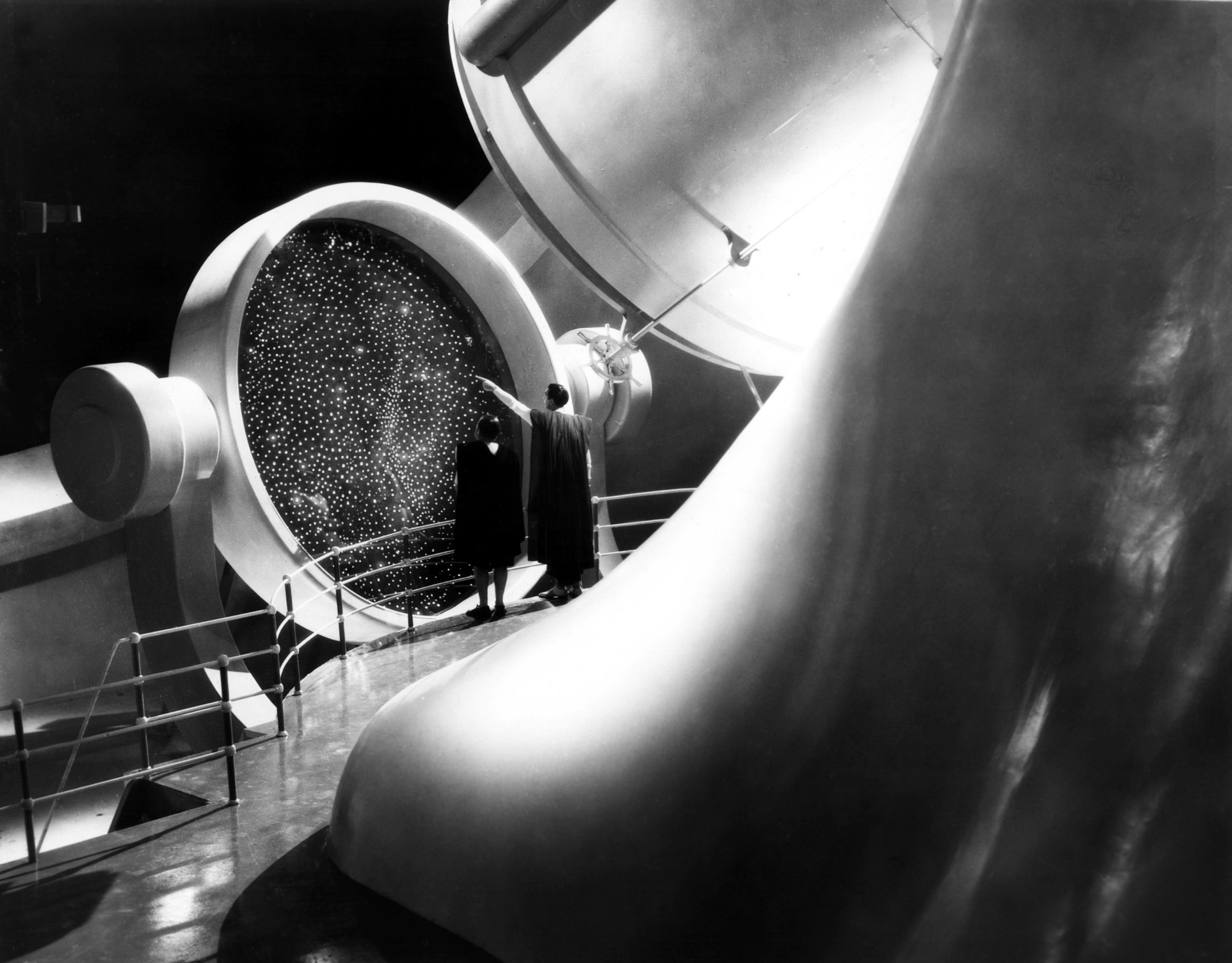
H. Creston Doner helped turn the future kitchen into an exhibit. Henry Dreyfuss made domestic systems feel organized and humane, even when they’re deeply engineered. Raymond Loewy taught America to want streamlined machines in the home. Charles and Ray Eames translated the future into exhibitions you can walk into, like their work for IBM at the 1964 World’s Fair. Benjamin Thompson opened Design Research in Cambridge in 1953, making modern design purchasable. Marimekko arrived in America through channels like that, and textiles do what textiles always do—they smuggle aesthetics into daily life.
By the mid-century, corporations learned to sell tomorrow as a product demo. They staged a new domestic life as theater. They let ordinary people walk through prototypes and imagine their own living room catching up. This created a social desire. A new status symbol. Then it started appearing on televisions and in advertisements.
You could argue that the twentieth century’s most influential design galleries weren’t museums. They were world fairs, department stores, and corporate exhibits. Places where the future was packaged as something you could touch, desire, and eventually finance.
Even Disneyland got in on it. The future wasn’t just a poster. It was an attraction. A walk-through promise. Tomorrow, as entertainment, with a gift shop at the exit, to remember that moment.
(I was rewatching my favorite animated film, Batman: Mask of Phantasm, and there’s a scene where Bruce and Andrea visit an exhibition called “World of the Future.” Look at the images: rockets, robots, the “house of the future”, and Bruce looking at what is a model for what would become his Batmobile.)


So when people ask, “Where is the twenty-first-century aesthetic?” it helps to be honest about what we are really asking. We are asking for the output without rebuilding the factory or questioning the foundations in which new futures are inevitable.
An aside: Americans are arguably weak at building things, e.g., bridges, tunnels, roads, and most obviously, homes. This challenge is a deeply structural problem for the country writ large, especially as we constantly compare ourselves to China.
Steph’s essay points right at this. Bauhaus wasn’t a style guide. It was a milieu—a shared experimental environment that retrained perception and remade the categories of thought and making. That’s why it mattered. That’s why it traveled. That’s why the downstream world started to look like it.
Which brings me back to America, and why that Lexington story keeps sticking. Because the most significant driver wasn’t chairs or glass or appliances. It was a call.
“A good story doesn’t just copy life, it pushes back on it.”
— Barbara Kingsolver
America has always needed a frontier story. For a long time, it was the Wild West. Rugged individualism. Dirt roads. “Go anyway.” In the early 1960s, Western TV shows were basically a national lullaby. Then Sputnik embarrassed us, and Kennedy reached for the same myth and aimed it upward. Space became the “New Frontier.”
That reframing mattered. It gave people a clear, optimistic picture of the future, not just a Cold War knife fight with the Soviets. NASA wasn’t a bureaucracy anymore. It was destiny.
And the call didn’t just produce rockets. It produced the silicon infrastructure underneath the phone in your pocket.
The integrated circuit was invented in 1958. Robert Noyce at Fairchild Semiconductor figured out how to put multiple transistors on a single silicon chip. It was a breakthrough. It was also, in 1960, a technology without a market. Chips were expensive, unproven, and fragile. Computers still filled rooms. Nobody knew if the technology would scale.
Then Kennedy made his commitment: a man on the moon by the end of the decade. NASA needed a guidance computer that weighed 70 pounds, not 7,000. The engineers at MIT’s Instrumentation Lab made a daring choice: they would build the Apollo Guidance Computer using integrated circuits—a technology most engineers considered too risky to bet a mission on.
That bet changed everything.
By 1963, the Apollo program was consuming 60% of America’s integrated circuit supply. NASA became the largest customer for an industry that barely existed. They forced Fairchild and its competitors to prove reliability, scale production, and drive down costs. In 1965, a Fairchild engineer named Gordon Moore noticed a pattern: chip density was doubling roughly every 2 years. He wrote an essay about it. We call it Moore’s Law now, and it held for decades—because government demand made the investment possible.
By the end of the decade, the area around Fairchild—Santa Clara County, California—had a new name: Silicon Valley.
Fairchild alone spun off over a dozen companies. One of them, Intel, was founded in 1968. By 1971, Intel introduced the first microprocessor. The line from Apollo to iPhone is direct.
Astronaut Eugene Cernan, the last man to walk on the moon, put it this way: Kennedy “reached out into the 21st century where we are today, grabbed hold of a decade of time, slipped it neatly into the ‘60s and ‘70s and called it Apollo.”
The Space Age didn’t happen because appliances got futuristic. Appliances became futuristic because the country had a future to aim for.
The call organized attention. It organized money. It organized pride and labor. And once the call took hold, the aesthetic poured into everything. Rockets and helmets, yes. But also living rooms, kitchens, chairs, typography, and toys. The story came first. The forms followed. A decade later, we were on the moon.
This is the part I want us to sit with, especially if we care about “new aesthetics.”
Story first. Form second.
Today, I don’t think we lack taste. I think we lack a shared story that doesn’t collapse into cynicism.
Leadership used to mean telling stories that enrolled people into a shared vision. Right now, that muscle feels atrophied. Everyone has a microphone. Almost nobody is building a future that people want to live in. The result is predictable—retreat into nostalgia, into comfort, into the sea of sameness. A world of competent design and timid imagination. We have mistaken legibility for culture, minimalism for maturity, and speed for direction.
So if we’re serious about responding to the New Aesthetic call, I don’t think the first move is to ask artists to “come up with a new look.” That’s a trap. That’s moodboarding the apocalypse.
This is why the New Aesthetic call matters. The grant money is not the point; it’s actually tame and almost laughably small given the scope and impact of this endeavor. The point is the attempt to rebuild conditions. To give artists, designers, and builders the time and oxygen for good ideas to emerge and take root. To let new forms gestate before the market asks them to behave.
Still, money alone won’t do it. The deeper question is: what call are we building toward?
If you asked me what call I want, it isn’t “more futuristic.” What the fuck does that even mean? Futuristic is a costume. I want a call that feels like life.
Maximum care. Maximum accountability. Maximum meaning. Maximum progress. Maximum support for children, parents, education, and clean water. Objects that don’t just perform, but belong. Buildings that don’t just impress, but hold us. Interfaces that don’t just convert, but teach people to see again. A future that doesn’t look like a spaceship, but feels like a place worth embodying.
That’s how new aesthetics are born. Not from an announcement. From a refusal, plus a pipeline, plus a call strong enough to pull the world into a different shape.
I think about Brian’s Lexington story as both a warning and a dare. The future showed up on a residential street because a whole system made it possible. It wasn’t vibes. It was education, economics, materials, and distribution, all aligned behind a story about where we were going.
Most of all, it came from people who deeply cared about their craft and how it reshaped or reinvented the fabric of the world. What an incredible privilege, it must not be squandered or used lightly.
If we want a new aesthetic now, we have to do the same work.
Name the frontier.
Tell extraordinary stories.
Build the pipeline.
Fund the builders and designers. Provide sandwiches and get out of the way.
Then make the future close enough that someone can bike past it and feel their world change.
Fascinating piece and a lot to think about regarding the world today and conditions to drive change. If I were to just look at how you connected the space frontier to chips to the technology revolution of today, might we consider sustainability as that next frontier? While it is out of vogue today, we live on a planet with finite resources and there is objective damage being done as a result of the way we live / produce / create / consume. Therefore, will this 'idea' drive a new era? Or perhaps a bigger idea 'harmony' (maybe influenced by a podcast I listened to this morning about China). Where it's not only about coexisting with the environment, but also each other, technology, etc. to live balanced, healthier, richer lives. Just some initial thoughts.. as this was a very thought provoking piece. I'll be keeping my eyes peeled on my next bike rides. Thank you for lighting up my mind on a Wednesday morning!
Excellent, timely and utterly necessary essay. AKA horse before the cart.